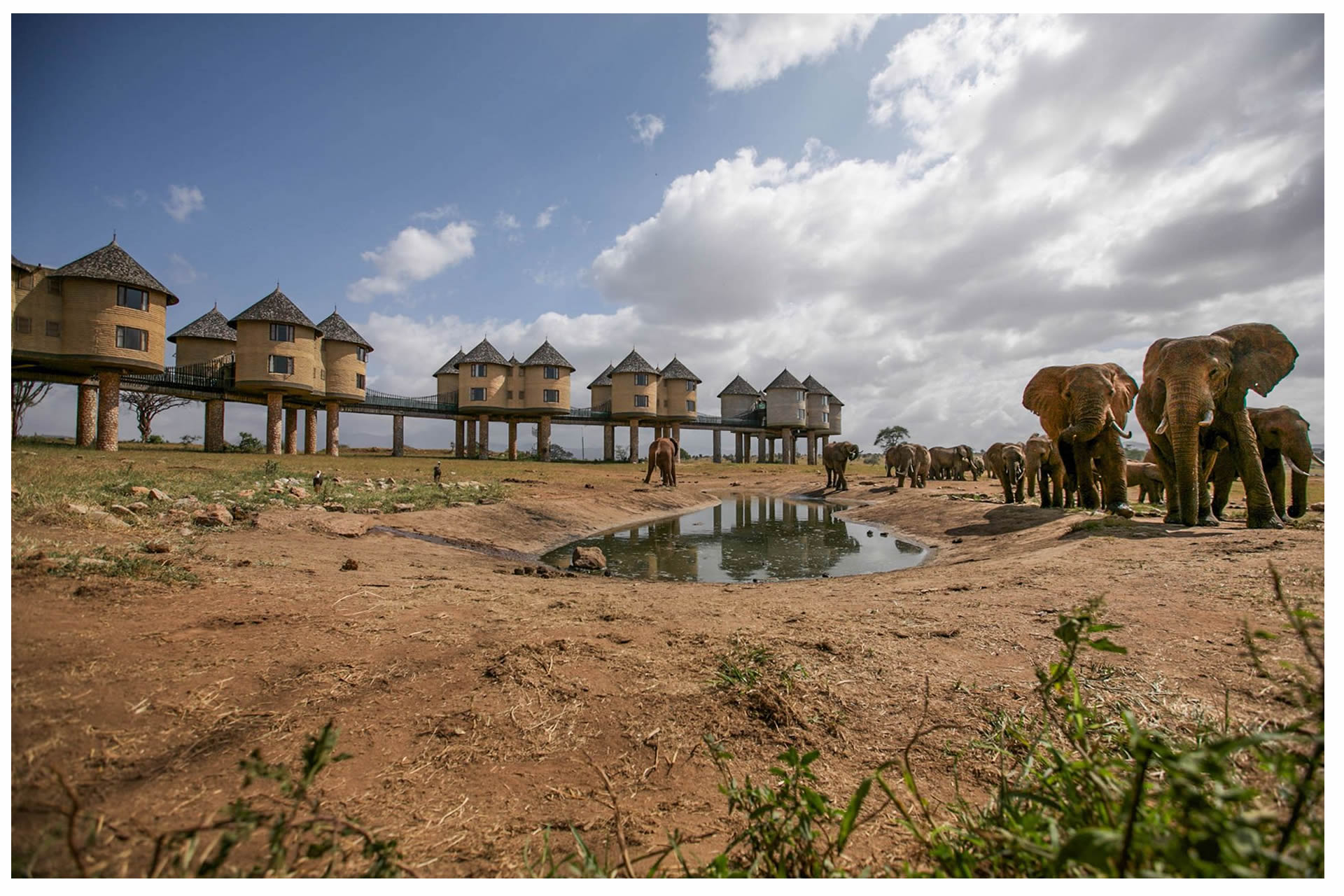
- Masai Mara National Reserve
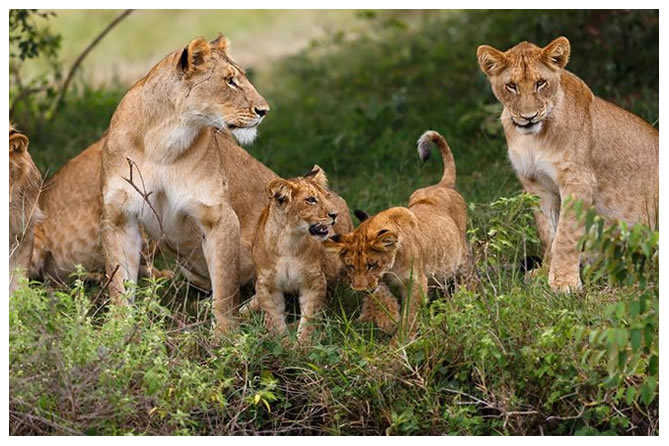
- Amboseli National Park
- Tsavo East National Park
- Tsavo West National Park
- Samburu National Reserve
- Lake Nakuru National Park
- Mount Kenya National Park
- Lake Naivasha National Park
- Aberdare National Park
- Nairobi National Park
- Meru National Park
- Serengeti National Park
- Ngorongoro Crater
- Lake Manyara National Park
- Tarangire National Park
- Arusha National Park
- Bwindi Impenetrable National Park
- Queen Elizabeth National Park
- Murchison Falls National Park
Offering superb plains scenery, unmatched safari activities and diverse wildlife, Masai Mara National Reserve is considered Kenya’s best park and one of Africa’s highest wildlife density region for predators. The reserve covers 583 square miles (1510 square kilometers) of outstanding wilderness in southwest Kenya. The location, wildlife, activities and comfortable moderate climate puts Mara at the top of the list, even for the most discerning traveler to Kenya.
When the public reserve was first established, it covered 645 square miles (1672 square kilometers). Strategically, the size of the reserve was later reduced in 1984 to accommodate Maasai cattle grazing on their ancestral lands. Although the decrease in land area may be considered a letdown for wildlife conservation and protection at its infancy, the animals and habitats of the reserve found new allies to ensure their survival for generations to come.
Many private conservancies have been introduced to protect the land that surrounds the reserve, thereby providing more area for wildlife. The lands not only protect habitats for resident species, but also preserve a critical part of the route used by wildebeests and zebras during the Great Migration that traverses the Masai Mara via the Serengeti National Park.
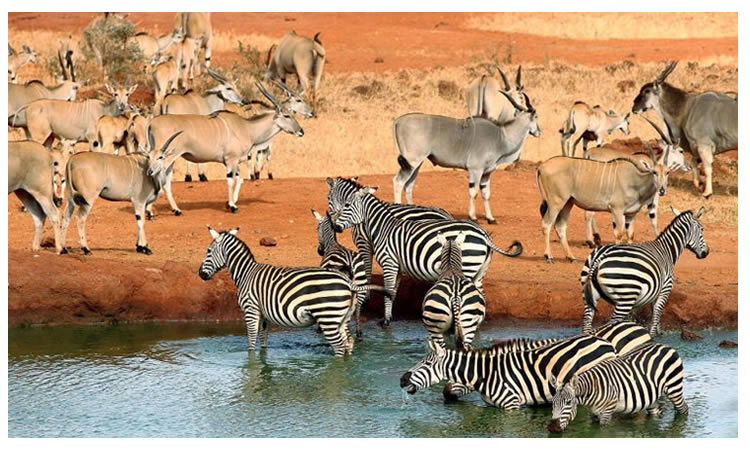
Recognized as one of the most spectacular wildlife events on the planet, the migration is a continuous route that is followed by an over 1.5 million wildebeests and thousands of zebras, gazelles and elands. In their never-ending pursuit for the finest grazing and watering grounds, the gnu relocate on an almost constant basis.
The perseverance of these wildebeests is demonstrated in their ability to mate while on the move, and many cows are pregnant during part of the migration. Additionally, even the youngest wildebeest calves are expected to keep up with the herd. Standing and walking within minutes are critical to its survival.
The migrators of Masai Mara National Reserve are present from approximately late July – early August until end of October – early November. But the Mara offers year-round game viewing. The reserve and surrounding conservancies offer diverse resident species experiences during your safari excursions. You will frequently see impalas, topis, giraffes, elephants, zebras, buffalos, warthogs and other grazing herbivores. With so many prey animals, Masai Mara is a veritable bonanza for large predators, such as lions, cheetahs, leopards, crocodiles and other stealthy, powerful hunters.
The abundance of terrestrial animals is enhanced by the presence of more than 450 winged species, including 57 birds of prey. Masai Mara Game Reserve offers AfricanMecca guests varied tour activities to explore the plains landscape and see incredible animal behaviors. The adjoining conservancies offer distinct activities that are not allowed in the reserve.
Game drives in the reserve are perfect for guests who want to be immersed in Kenya’s bush country and see larger animals. For guests who are interested in observing the nocturnal animals, we recommend night game drives in one of the private conservancies. The Serengeti-Mara ecosystem is recognized for an enormous diversity of flora and fauna, and many small details are missed during game drives. Most conservancies offer bush walks to give you an intimate look at the micro-ecosystems of the area.
To complement these walks, we recommend a balloon safari for a bird’s-eye view of the area. Lastly, the Maasai community is key to the advancement of wildlife management in the area. We recommend that you spend time learning more about these noble people by visiting one of their villages for a life-changing cultural experience in understanding their modesty and simplicity of their lives.
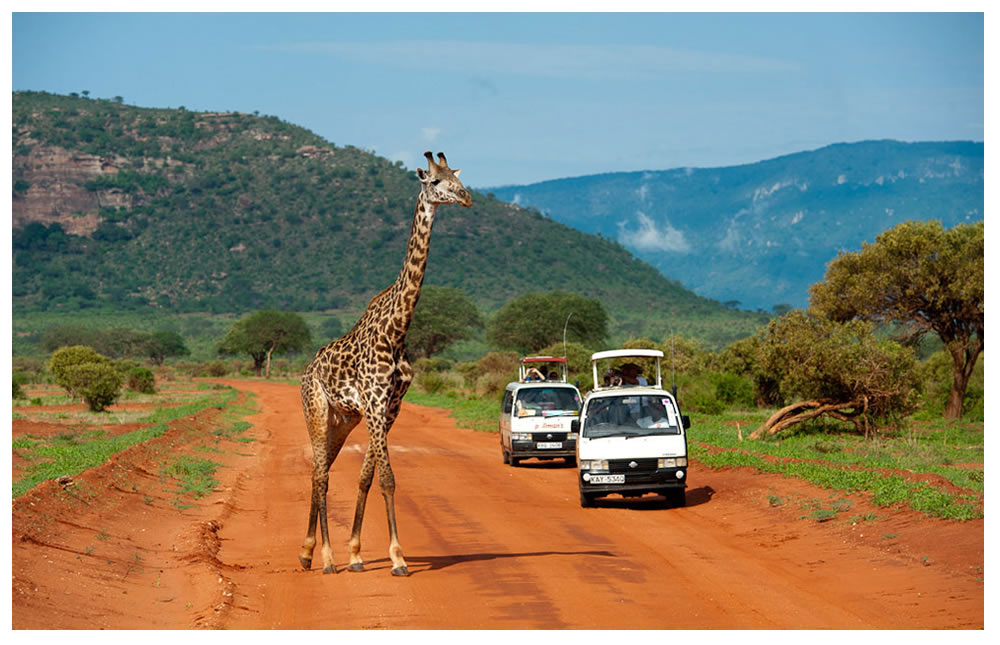
Driving along a wild road in a 4x4 safari vehicle with an experienced Maasai guide who eloquently and expertly describes the flora and fauna of Kenya's southern bush country . Savannah plains stretch to the horizon interrupted only by the iconic shape of Mount Kilimanjaro and the distinct flat-topped shape of acacia trees.
A graceful giraffe wraps a long, tough tongue around the thorny leaves while her youngster suckles for a warm morning meal. The trumpet of an elephant draws your eye just beyond this delightful scene where you see a bull chase away a frisky and playful calf.
Your guide stops the vehicle and points to a cloud of dust in the distance, describing the hunt that has begun. A herd of impalas and wildebeest grows restless, and you notice the stalking form of the fastest land animal on the planet – the cheetah. You are mesmerized by the action and await the heart-pounding chase that will ensue.
Your anticipation grows as you see the graceful cat edge ever closer to a vulnerable impala. Suddenly, the cheetah sprints, and the fast herbivore runs away, quickly changing direction in a futile effort to escape the prowess of a female predator that has venerable cubs to feed and hide away from other opportunistic predators like the hyenas.
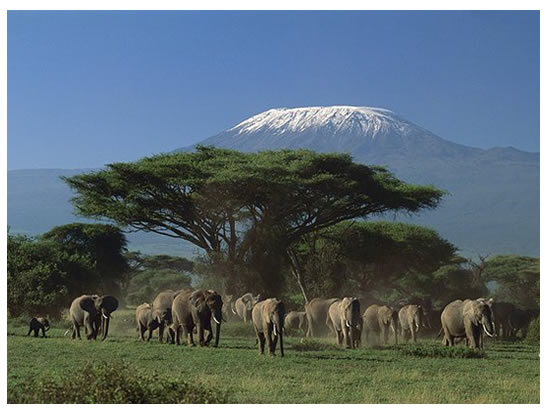
The Amboseli outback is a majestic landscape where events such as these unfolds every day across the 392 square kilometers (151 square miles) of protected wilderness. The park borders Tanzania and is situated at the base of Mount Kilimanjaro, Africa's tallest peak, and the melting snow flows into underground springs that feed the swamps and wetlands that dot the plains.
These water sources attract animals of all sizes, the most sought-after being– the free-roaming elephants, but you may also see elands, waterbucks, grant's gazelles, warthogs, coke's hartebeests, zebras and other grazing herbivores. The abundance of large prey supports lions, leopards, civets, wildcats and other elusive hunters, as well as jackals, hyenas and other scavengers. Your guide will also help you locate and identify yellow and olive baboons and black-face vervet monkeys.
A bird watching vacation in Amboseli Park gives you the chance to record your observations of commonly sighted grey-crowned cranes, superb starlings, beautiful sunbird, secretary bird and several more of the 425 feathered resident and migratory species. One of the best vantage points that will give you a true appreciation of the immense natural beauty of Amboseli is the Observation Hill, a perfect location for sundowners, and the stunning sunsets are not to missed by photographers.
The proud Maasai people continue to live outside the park borders, following their ancient traditions and tending to their cherished cattle. We highly recommend that you visit an authentic village during your exploratory cultural tour in this expanse of East Africa.
Your authentic wilderness trip to East Africa should include the majestic Tsavo East National Park. Together with Tsavo West National Park, this 4535 square miles (11,747 square kilometers) wilderness forms the spectacular Tsavo National Parks (totaling 20812 sq. km or 8035 sq. miles), the largest park in Kenya and noted as one of the largest wildlife sanctuary on the planet!
Tsavo East National Park, though, holds its own esteemed credits and is known as one of the greatest biodiversity sites in the world. With easy access to the park from the coast of Mombasa, guests travel across immense savannah plains that are dotted with thorn bushes, stands of acacia trees, scrublands and woodlands. The rolling topography lulls you into a dream-like state as you uncover the varied ecological and historical treasures.
The massive Yatta Plateau emerges from the horizon, and before you know it, you are sitting at the very site where molten rock from Ol Doinyo Sabuk Mountain had formed one of the longest lava flows on earth. The rocky outcrop known as “Mudanda Rock” is another breathtaking geological structure that extends 1.6 kilometers along the plains. At the base of the immense rock is a watering hole where you catch your first glimpse of animals drinking.
The Athi River weaves its way along the landscape lined with doum palms. As you follow the meandering river, you arrive at Lugards Falls where the water is squeezed through narrow openings in strangely eroded rocks. The change in pressure creates a wonderful series of rapids that eventually end in pools where crocodiles await a tasty meal from an unsuspecting thirst antelope. This is where the river meets the adjoining tributary from the Tsavo River to form the Galana River that runs all through the park and all the way to the coast of Watamu as the renewed Sabaki River.
You may also see man-made structures that tell the story of human history, including railway travel, exploration and wartime battles. Tsavo East also has the seasonal Voi River, which originates from the highlands of Taita Hills, running along the park where it partly drains at Aruba Dam and the remaining drains all the way to the Gedi, near Watamu.
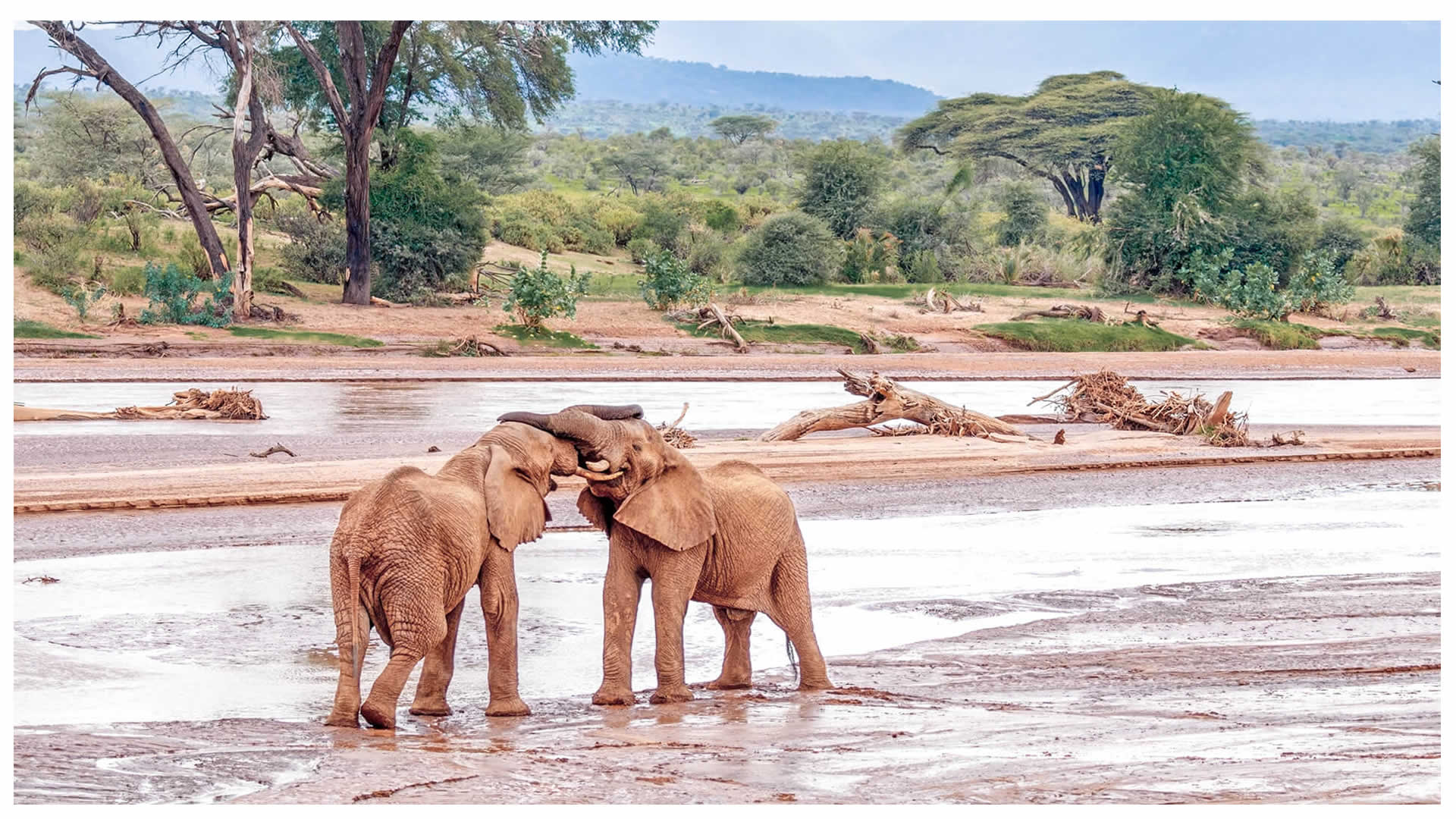
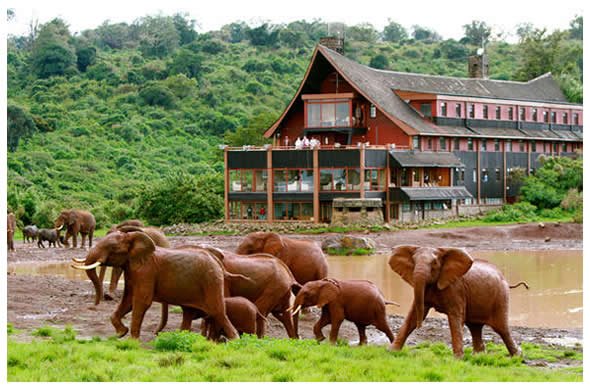
Some of Kenya’s largest elephant herds are in Tsavo East Park, so you will likely see these grey-skinned animals in several locations. What you may not expect, though, is the color of their skin being partly red. These elephants dust themselves with the red-brown Tsavo murram soil, so photographing them creates evocative images that are the envy of many visitors.
Prides of mane-less lions, some sharing the DNA from the man-eater lions of Tsavo along with herds of buffalos are also been frequently seen in the park. Dispersed amongst these animals are giraffes, zebras, lesser kudus, coke’s hartebeests, grant’s gazelles, klipspringers, impalas, waterbucks, gerenuks, hunter’s hartebeests and many more sought-after fauna.
In the rivers, you may see hippos enjoying the refreshing water that cools them throughout the day. Bird lovers find a paradise of resident and migratory species as more than 500 species have been recorded in Tsavo East. You are sure to have a discerning Kenya birding tour of a lifetime should you sight the kestrels and buzzards that respite in the park during their migrations.
We welcome you to wonders of Tsavo East National Park, easily accessible from the coastal beach resorts of Mombasa, Malindi, Watamu and Kilifi, and we look forward to designing the perfect African wildlife focused safari that will exceed your expectations.
A one-of-a-kind Kenya expedition holiday awaits you at Tsavo West National Park! In no time at all, you are sitting front-and-center amidst some of Africa’s most graceful, powerful creatures. Take a front-row seat in a custom safari vehicle to watch the natural behaviors of leopards, cheetahs, mane-less lions and other predators stalk impalas, gazelles, elands, zebras, fringe-eared oryx, dik-diks and other prey animals from the cover of dense bush and deep shadows.
This immense action unfolds against a vigilant backdrop of grazing and foraging elephants, giraffes, buffalos, protected rhinos and other large herbivores. Walk under tree canopies filled with scampering vervet monkeys, baboons, galago and other tree dwellers. With so many wildlife species within the diverse landscape, you will be delighted and thrilled every moment of your personalized Kenya dream tour with us.
Tsavo West shares its northeast boundary line with Tsavo East National Park, and together these two parks form one of the world’s largest national parks. The terrain within Tsavo West National Park is quite varied and includes acacia woodlands, expansive savannah grasslands, scrublands, rocky ridges, volcanic remnants and riverine ecosystems.
Prominent natural landmarks include Mzima Springs in the central region of the park including the Shetani lava flow on the western precinct and Lake Jipe and Chala in the southwestern corners. The nutrient-rich soil supports more than 1,000 plant species that provide wildlife and avi-fauna with food, shelter and nesting sites.
Follow in the footsteps of some of Africa’s greatest explorers and endemic tribes during your safari tour activities. Cross the vast landscape on murram roads that take you to some of the farthest reaches of the park where the animals roam amidst unspoiled territory. From the comfort and safety of your trip vehicle, your guide shows you the park’s pure wildness and the many habitats that thrive with flora and fauna.
Take a break from the action-intense Tsavo West safari game drives, and enjoy a much more leisurely pace of a guided nature walk. These walks allow you to gain a deeper understanding of the smaller aspects of the park, as well as the tiny animals that scurry about in the brush.
For our more physically-fit guests, we can also arrange several hiking activities. Hiking is an excellent way to reach the heights of the park and immerse yourself in expansive views. Imagine trekking through the Ngulia Hills surrounded by sheer cliffs and jagged peaks to an elevation where raptors soar through the skies searching for their prey. We can also arrange a climb to the rim of Chaimu Crater.
For less aggressive hiking, we recommends the winding trail to Roaring Rocks, the rejuvenating walk to the springs of Mzima and the intriguing trail around lava flow and caves of Shetani. Adventurous guests may be inclined to explore the hollows, but we do caution you as the cave environment can be dangerous with the denning of wildlife. Extreme mountaineers can vertical rock climb at Kichwa Tembo.
Enjoy a quintessential Kenyan northern safari with unrestricted access to rugged East African wilderness by including Samburu National Reserve in your bush plans! The 165-square kilometers (64 square miles) reserve is located northeast of Laikipia and is home to some of Africa’s rarest flora and fauna. Samburu Reserve is a community-based wilderness that is preserved and operated by the resident Samburu communities under a centralized local council.
By finding successful strategies for balancing the needs of their people with wildlife protection, the Samburu have molded a wilderness that is home to some of the most threatened species in Kenya, Africa and the world. As you travel through Samburu wilderness with you will see how the diverse terrain transitions from rolling plains to volcanic remnants.
The vegetation is concentrated along the Ewaso Nyiro River, the primary source of water in the reserve. Although this mighty river normally courses through the reserve without impedance, the waters stop during the most extreme droughts. When this happens, the animals and communities depend on the Isiolo River that the reserve shares with neighboring Buffalo Springs National Reserve.
You may not expect to see wildlife in such a stark landscape, but Samburu is home to an abundance of animal species. The most notable and sought after are known as the Samburu Special Five – Somali ostrich, grevy’s zebra, gerenuk, reticulated giraffe and beisa oryx.More common mammals are grant’s gazelles, impalas, waterbucks, dik diks, olive baboons, elephants, warthogs, hippos and many others.
These prey animals support an active population of carnivores, including lions, cheetahs, crocodiles, leopards, to name a few, and you may even sight the powerful African wild dogs that have been recorded in the reserve. During your nature walk, ask your guide to help you locate signs of the critically endangered pancake tortoise.
Feathered creatures number over 450 species, including species from the riverine forests and northern bush. During your Samburu guide will help you identify diverse sunbirds, bee-eaters, kingfishers, woodpeckers, hornbills and many other avi-fauna including birds of prey like palm-nut vulture, verreaux's eagle-owl, Egyptian vulture, lappet-faced vulture etc.
Imagine the excitement of sighting a vulnerable species, such as great egrets, African darters, white-headed vultures, yellow-billed ox-peckers and martial eagle. We recommend that you enjoy every aspect of Samburu Reserve with expertly guided game drives, nature walks and birdwatching trips. The Samburu people have worked diligently to ensure the success of the reserve, so we also recommend that you plan time to visit the local villages and interact with the community.
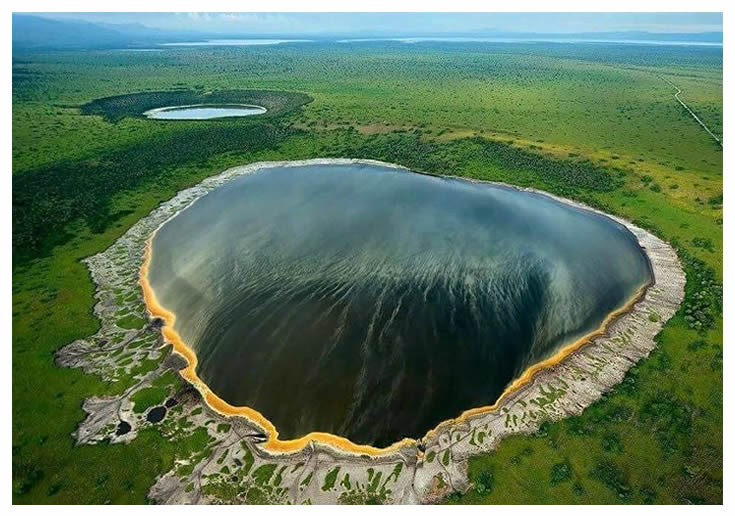
Lake Nakuru National Park is one of Kenya’s most famous protected wildlife areas and a major tourist attraction in East Africa. Located in Nakuru County within the Great Rift Valley, the park lies approximately 160 kilometers northwest of Nairobi. It was first established as a bird sanctuary in 1960 and later gazetted as a national park in 1961. Covering about 188 square kilometers, the park surrounds the shallow alkaline Lake Nakuru, which forms the heart of the ecosystem. The national park is internationally recognized for its biodiversity, spectacular scenery, and strong conservation programs, especially for endangered species such as rhinos and Rothschild’s giraffes.
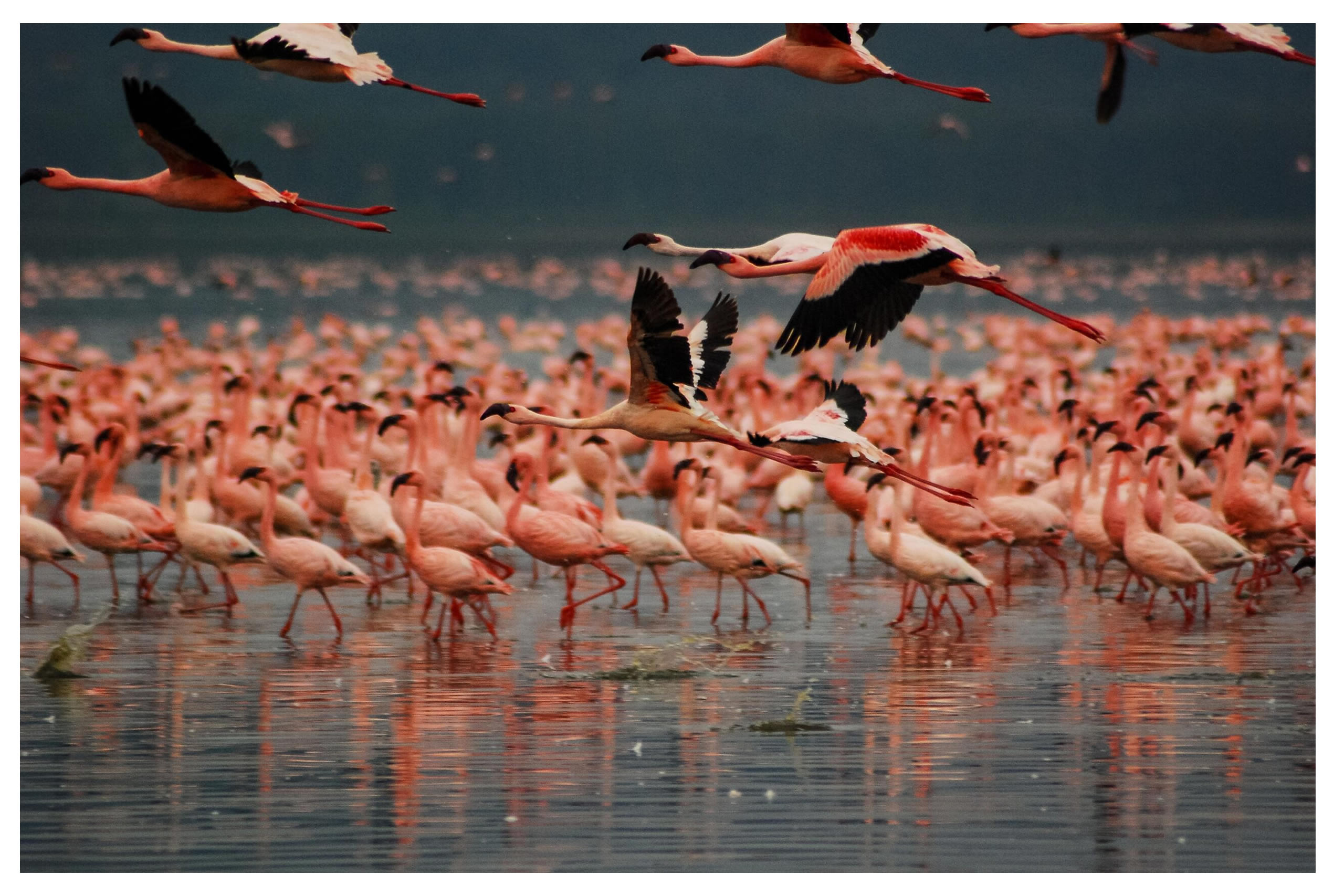
Lake Nakuru became globally famous because of the thousands, and sometimes millions, of flamingos that historically gathered along the shores of the alkaline lake. These birds feed on algae found in the lake, creating a striking pink coloration visible from a distance. Although flamingo populations fluctuate due to changing water levels and environmental conditions, the park remains an important habitat for both lesser and greater flamingos. In addition to flamingos, the park hosts over 450 bird species, making it one of the best birdwatching destinations in Africa. Visitors can observe pelicans, cormorants, African fish eagles, kingfishers, herons, storks, and many migratory birds throughout the year.
Apart from its rich birdlife, Lake Nakuru National Park supports a wide variety of mammals and reptiles. The park is especially important as a sanctuary for black and white rhinoceroses. Due to increasing poaching threats in Kenya during the 1980s and 1990s, the park was fenced to provide better protection for endangered rhinos. Today, it is considered one of the country’s leading rhino conservation centers. The park also shelters lions, leopards, buffaloes, zebras, hippos, waterbucks, impalas, warthogs, and olive baboons. One of its unique attractions is the Rothschild’s giraffe, a rare and endangered subspecies introduced into the park to aid conservation efforts.
The scenery within the park is diverse and beautiful. Besides the lake itself, the landscape includes wooded acacia forests, rocky escarpments, open grasslands, marshes, and waterfalls. Several viewpoints provide excellent opportunities for photography and sightseeing. Baboon Cliff is among the most popular viewpoints, offering panoramic views of the lake and surrounding landscape. Lion Hill and Out of Africa Lookout are also well-known scenic points within the park. In the southern section of the park lies Makalia Falls, a seasonal waterfall surrounded by lush vegetation that attracts many visitors during the rainy season.
Tourism is a major economic activity associated with Lake Nakuru National Park. The park attracts both domestic and international tourists who visit for game drives, birdwatching, nature photography, educational tours, and research activities. Its accessibility from Nairobi makes it a convenient destination for weekend trips and safaris. Several lodges, campsites, and hotels located around the park provide accommodation and support tourism development in the region.
Conservation remains a central function of the park. The Kenya Wildlife Service manages the park and works closely with environmental organizations and local communities to protect wildlife and habitats. However, the park faces challenges such as climate change, pollution, invasive plant species, human-wildlife conflict, and fluctuating lake water levels caused by increased rainfall and environmental changes. Rising water levels in recent years have affected some wildlife habitats and tourism facilities around the lake.
Despite these challenges, Lake Nakuru National Park continues to be one of Kenya’s most valuable conservation areas. Its combination of rich wildlife, scenic beauty, and ecological importance makes it a symbol of successful conservation in East Africa. The park not only protects endangered species but also contributes significantly to scientific research, environmental education, and Kenya’s tourism industry. As a result, it remains a treasured natural heritage site for both Kenya and the world.
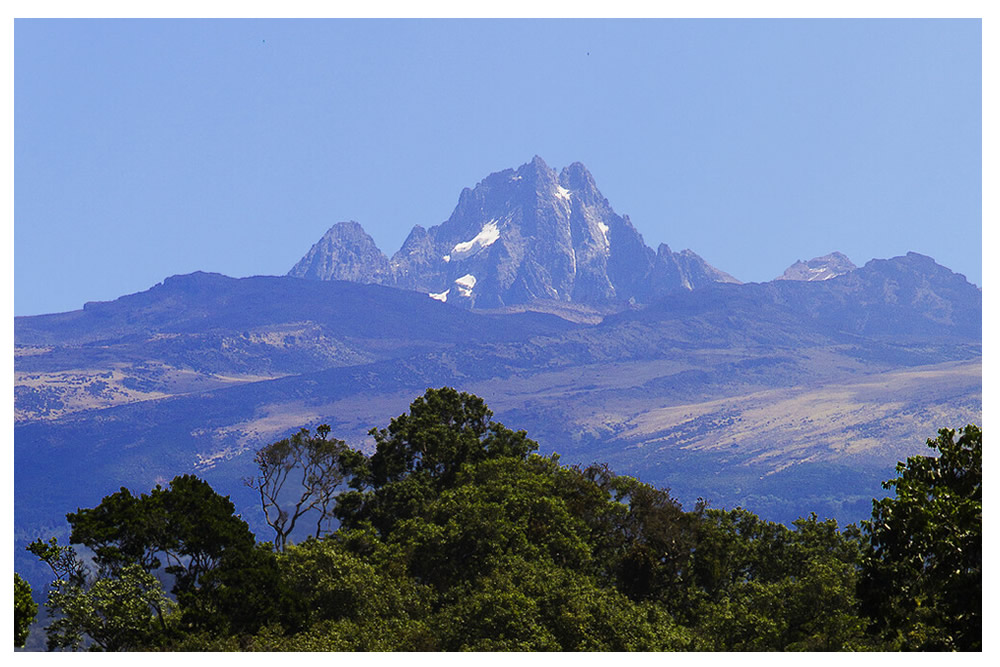
Mount Kenya National Park is one of Kenya’s most important conservation areas and a major tourist attraction known for its spectacular mountain scenery, rich biodiversity, and cultural significance. The park surrounds Mount Kenya, the second-highest mountain in Africa after Mount Kilimanjaro, with its highest peaks reaching 5,199 meters above sea level. Located about 175 kilometers northeast of Nairobi, the national park covers approximately 715 square kilometers and forms part of the larger Mount Kenya forest ecosystem. It was established in 1949 to protect the mountain’s unique environment, wildlife, and water catchment areas. In 1997, the park was designated a UNESCO World Heritage Site because of its ecological and natural importance.
Mount Kenya is an extinct volcanic mountain formed millions of years ago through volcanic activity. Over time, erosion and glaciation shaped its rugged peaks, valleys, and glaciers. The mountain has three main peaks: Batian, Nelion, and Point Lenana. Batian and Nelion are technical climbing peaks mainly attempted by experienced mountaineers, while Point Lenana is accessible to trekkers and is the most frequently climbed peak by tourists. The mountain attracts climbers, hikers, researchers, and nature lovers from around the world.
The park contains a wide range of vegetation zones that change with altitude. Lower slopes are covered by dense montane forests dominated by cedar, bamboo, and podocarpus trees. Higher areas contain moorlands, giant heathers, and unique afro-alpine vegetation such as giant lobelias and giant groundsels. Near the peaks, vegetation becomes sparse due to cold temperatures and rocky terrain. These ecosystems provide habitats for many species of wildlife and birds.
Mount Kenya National Park supports a rich variety of animals, although many are difficult to spot because of the dense forests and mountainous terrain. Wildlife found in the park includes elephants, buffaloes, leopards, bushbucks, colobus monkeys, hyenas, and giant forest hogs. The forests are also home to many bird species such as sunbirds, eagles, turacos, and crowned cranes. The park plays an important role in conserving endangered species and maintaining ecological balance in the region.
The mountain is also culturally significant to local communities, especially the Kikuyu, Embu, and Meru peoples. Traditionally, these communities considered Mount Kenya a sacred place and believed it to be the dwelling place of God. Many cultural practices and beliefs are connected to the mountain, and it remains an important symbol of heritage and identity.
Tourism is a major activity within the park. Visitors enjoy mountain climbing, hiking, camping, wildlife viewing, birdwatching, photography, and nature walks. Several trekking routes lead to the mountain’s peaks, including the Sirimon, Naro Moru, and Chogoria routes. Chogoria is often considered the most scenic because of its waterfalls, lakes, and dramatic landscapes. Accommodation options include mountain huts, campsites, lodges, and hotels around the park.
The park is managed by the Kenya Wildlife Service in partnership with conservation organizations and local communities. Mount Kenya serves as one of Kenya’s most important water towers, supplying water to rivers that support agriculture, hydroelectric power, and domestic use across the country. However, the ecosystem faces threats such as deforestation, illegal logging, climate change, and shrinking glaciers.
Despite these environmental challenges, Mount Kenya National Park remains one of Africa’s outstanding natural treasures. Its dramatic landscapes, ecological importance, and cultural value continue to attract visitors and support conservation efforts. The park plays a vital role in protecting biodiversity, supporting tourism, and preserving one of Kenya’s most iconic landmarks for future generations.
Lake Naivasha is one of Kenya’s most beautiful freshwater lakes and an important ecological and economic resource in the Great Rift Valley. Located about 90 kilometers northwest of Nairobi, the lake lies at an altitude of approximately 1,884 meters above sea level. Unlike many Rift Valley lakes that are alkaline, Lake Naivasha is freshwater, making it unique within the region. The lake covers an area that changes depending on rainfall and seasonal conditions, but it generally spans around 139 square kilometers. Surrounded by forests, swamps, volcanic landscapes, and flower farms, Lake Naivasha is a popular destination for tourism, agriculture, and wildlife conservation.
The name “Naivasha” comes from the Maasai word “Enaiposha,” meaning “rough water,” referring to the sudden storms that often occur on the lake. Lake Naivasha receives water mainly from the Malewa and Gilgil rivers and has no visible outlet. Scientists believe that water leaves the lake through underground seepage. The lake supports a rich ecosystem that attracts a wide variety of birds, fish, and mammals.
Lake Naivasha is internationally recognized as an important bird habitat. More than 400 bird species have been recorded around the lake, making it one of the best birdwatching areas in Kenya. Common birds include African fish eagles, pelicans, cormorants, kingfishers, herons, jacanas, and ospreys. The sight and sound of fish eagles hunting over the water is one of the lake’s most famous attractions. Migratory birds from Europe and other regions also visit the lake seasonally.
The lake and surrounding areas are home to many animals. Hippos are among the most common and recognizable mammals found in the lake, especially during the evening and early morning hours. Other wildlife in the region includes giraffes, zebras, buffaloes, waterbucks, impalas, monkeys, and occasionally leopards. Nearby conservation areas such as Hell's Gate National Park and Crescent Island provide excellent opportunities for walking safaris and wildlife viewing.
Tourism plays a major role in the Lake Naivasha region. Visitors enjoy boat rides, birdwatching, fishing, camping, photography, and nature walks. Boat tours often allow tourists to observe hippos and birds at close range while enjoying views of the surrounding escarpments and forests. The lake area also contains several resorts, lodges, and campsites that attract both local and international tourists. Its close proximity to Nairobi makes it a popular weekend getaway destination.
Lake Naivasha is also economically important because of large-scale horticulture and flower farming around its shores. The region produces flowers and vegetables mainly for export to European markets, providing employment and income for many people. However, rapid agricultural expansion and population growth have created environmental challenges. Water pollution, excessive water extraction, habitat destruction, and invasive plant species such as water hyacinth threaten the lake’s ecosystem.
Conservation efforts by the Kenya Wildlife Service, environmental groups, and local communities aim to protect the lake and promote sustainable use of its resources. Lake Naivasha is recognized under the Ramsar Convention as a wetland of international importance because of its ecological value.
Today, Lake Naivasha remains one of Kenya’s most significant natural attractions. Its combination of freshwater ecosystems, abundant wildlife, scenic beauty, and economic importance makes it a valuable resource for tourism, conservation, and local livelihoods.
Aberdare National Park is one of Kenya’s most scenic and ecologically important highland protected areas. Located in central Kenya, about 150 kilometers north of Nairobi, the park covers approximately 766 square kilometers and forms part of the larger Aberdare Mountain Range. It was established in 1950 to protect the forested mountains, wildlife, and vital water catchment areas that supply rivers flowing into many parts of the country.
The park is characterized by steep forested slopes, deep ravines, bamboo zones, open moorlands, waterfalls, and alpine landscapes. The Aberdare Range rises to over 4,000 meters above sea level, creating a cool and misty environment that supports dense vegetation and unique wildlife habitats. Because of its altitude and rainfall, the park plays a critical role as one of Kenya’s major “water towers,” feeding rivers such as the Tana and Athi, which are essential for agriculture, hydroelectric power, and domestic water supply.
Wildlife in Aberdare National Park is diverse, although animals are often more difficult to spot due to thick vegetation. The park is home to elephants, buffaloes, leopards, hyenas, bushbucks, giant forest hogs, warthogs, zebras, and various species of antelope. It is also one of the best places in Kenya to see the elusive bongo, a rare and shy forest antelope that is highly adapted to dense highland forests.
The park is also known for its unique “tree hotel” experience, especially at the famous The Ark Lodge and Treetops Lodge. These lodges are built overlooking waterholes and salt licks where animals regularly come to drink, allowing visitors to observe wildlife up close from safe viewing platforms. This style of accommodation makes Aberdare a distinctive safari destination compared to other Kenyan parks.
Birdlife in the park is rich, with over 250 species recorded. Common birds include sunbirds, turacos, eagles, hornbills, and various forest and highland species. The diverse habitats from lowland forests to alpine moorlands support a wide range of avian life, making it a rewarding destination for birdwatchers.
Aberdare National Park also holds historical significance. It is associated with the capture of Queen Elizabeth II’s accession to the throne in 1952, which took place at Treetops Lodge during her visit to Kenya. This event brought international attention to the park and further increased its tourism appeal.
Tourism activities in the park include game drives, guided forest walks, hiking, birdwatching, and photography. The park’s rugged terrain makes some areas less accessible, but it offers a more secluded and tranquil safari experience compared to busier parks like the Maasai Mara.
The park is managed by the Kenya Wildlife Service, which focuses on conservation, anti-poaching efforts, and protection of water catchment forests. However, the ecosystem faces threats such as deforestation, climate change, human encroachment, and habitat degradation, which can affect both wildlife and water resources.
Despite these challenges, Aberdare National Park remains one of Kenya’s most important conservation areas. Its unique highland ecosystems, rich biodiversity, and vital role in water supply make it a key part of Kenya’s natural heritage and an exceptional destination for nature-based tourism.
Nairobi National Park is one of Kenya’s most unique wildlife conservation areas and the only national park in the world located so close to a major capital city. Situated about 7 kilometers south of Nairobi’s city center, the park covers approximately 117 square kilometers and offers visitors the rare experience of viewing wild animals against the backdrop of a modern urban skyline. Established in 1946, Nairobi National Park was Kenya’s first national park and remains an important symbol of the country’s commitment to wildlife conservation.
The park consists mainly of open grass plains, scattered acacia bush, riverine forests, and seasonal wetlands. Despite its relatively small size, it supports a rich variety of wildlife and serves as an important conservation area for many species. The southern section of the park is open and connects to the larger Athi-Kapiti plains ecosystem, allowing migratory animals to move in and out of the park seasonally.
Nairobi National Park is home to a wide range of animals, including lions, leopards, cheetahs, buffaloes, giraffes, zebras, wildebeests, elands, impalas, warthogs, baboons, and hippos. The park is particularly important for rhino conservation and contains one of Kenya’s most successful black rhinoceros sanctuaries. Both black and white rhinos can often be seen grazing in the park, making it one of the best places in Kenya to observe these endangered animals.
Although elephants are not found within the park because of its limited size and proximity to the city, the diversity of other wildlife makes Nairobi National Park an outstanding safari destination. Predators such as lions and cheetahs are frequently seen hunting on the open plains, while hyenas and jackals are also common. The park supports over 400 bird species, including ostriches, secretary birds, crowned cranes, vultures, eagles, and many migratory birds, making it an excellent location for birdwatching.
One of the park’s major attractions is its accessibility. Visitors can easily reach the park from Nairobi within a short time, allowing tourists and residents to enjoy game drives without traveling long distances to remote safari destinations. Early morning and evening game drives are especially popular because wildlife is more active during cooler hours. The park also offers opportunities for photography, educational tours, and nature study.
Several important conservation and educational centers are located near the park. The David Sheldrick Wildlife Trust, famous for rescuing and rehabilitating orphaned elephants and rhinos, is situated near the main entrance. Nearby, the Nairobi Animal Orphanage provides care for injured and rescued wild animals, while the Safari Walk offers visitors educational exhibits about Kenya’s ecosystems and wildlife.
Tourism contributes significantly to the park’s importance. Both local and international visitors come to experience wildlife viewing near the city. The park’s scenic landscapes combined with views of Nairobi’s skyscrapers create a striking contrast between nature and urban development.
The park is managed by the Kenya Wildlife Service, which works to protect wildlife and habitats while addressing conservation challenges. However, Nairobi National Park faces threats from urban expansion, pollution, habitat fragmentation, and human-wildlife conflict caused by increasing population growth around the city. Conservationists continue to advocate for the protection of wildlife migration corridors connecting the park to surrounding ecosystems.
Despite these challenges, Nairobi National Park remains one of Africa’s most extraordinary protected areas. Its close proximity to a modern city, rich wildlife population, and conservation significance make it a unique natural treasure and an important center for environmental education and tourism in Kenya.
Meru National Park is one of Kenya’s most scenic and ecologically diverse wildlife conservation areas, located in eastern Kenya about 350 kilometers northeast of Nairobi. The park covers approximately 870 square kilometers and lies on the eastern slopes of Mount Kenya’s ecosystem. Established in 1966, Meru National Park is known for its rich wildlife, dramatic landscapes, and its historical connection to conservation efforts in Kenya.
The park gained international recognition through the work of conservationists George and Joy Adamson, particularly the story of Elsa the lioness, which was popularized in the book and film Born Free. This legacy helped highlight the importance of wildlife protection in Kenya and contributed to global awareness of conservation issues in Africa.
Meru National Park features a wide variety of landscapes, including open grasslands, riverine forests, palm groves, swamps, acacia woodlands, and volcanic hills. Thirteen rivers and numerous streams flow through the park, making it one of the most well-watered protected areas in Kenya. This abundance of water supports lush vegetation and a high diversity of wildlife throughout the year.
The park is home to a wide range of animals, including elephants, lions, leopards, cheetahs, buffaloes, giraffes, zebras, hippopotamuses, crocodiles, antelopes, and warthogs. It is also one of the few parks in Kenya where visitors may see the rare lesser kudu and gerenuk, both well adapted to the arid and semi-arid environments of eastern Kenya. Predators such as hyenas and wild dogs are also occasionally spotted, although they are more elusive.
Meru National Park is also an important birding destination, with over 400 recorded bird species. Common birds include kingfishers, eagles, hornbills, bee-eaters, ostriches, and water birds found along the rivers and wetlands. The diverse habitats within the park support both resident and migratory bird species throughout the year.
One of the park’s key attractions is its relatively low tourist density compared to more famous parks like the Maasai Mara or Amboseli. This makes Meru an ideal destination for visitors seeking a quieter, more remote safari experience. Game drives, birdwatching, guided nature walks, and photography are among the most popular activities.
The park also contains several scenic features, including the Tana River, which forms part of its southern boundary and supports a rich ecosystem along its banks. The park’s river systems and wetlands create a green contrast to the surrounding semi-arid landscapes of eastern Kenya.
Meru National Park is managed by the Kenya Wildlife Service, which oversees conservation, anti-poaching efforts, and tourism development. The park faced significant challenges in the late 20th century due to poaching and insecurity, which greatly reduced wildlife populations. However, intensive conservation and rehabilitation efforts have helped restore much of its ecological balance, and wildlife numbers have steadily improved.
Despite ongoing challenges such as poaching risks, climate variability, and human-wildlife conflict in surrounding areas, Meru National Park has made a strong recovery and continues to grow in importance. Today, it stands as a symbol of successful conservation restoration in Kenya and remains one of the country’s most rewarding yet less crowded safari destinations.
Serengeti National Park is one of Africa’s most famous wildlife conservation areas and among the world’s greatest natural heritage sites. Located in northern Tanzania, the park covers approximately 14,750 square kilometers of savannah, grasslands, woodlands, and riverine forests. Established in 1951, Serengeti National Park is the oldest national park in Tanzania and is internationally recognized for its exceptional biodiversity and spectacular wildlife migrations. In 1981, it was designated a UNESCO World Heritage Site because of its ecological importance and outstanding natural beauty.
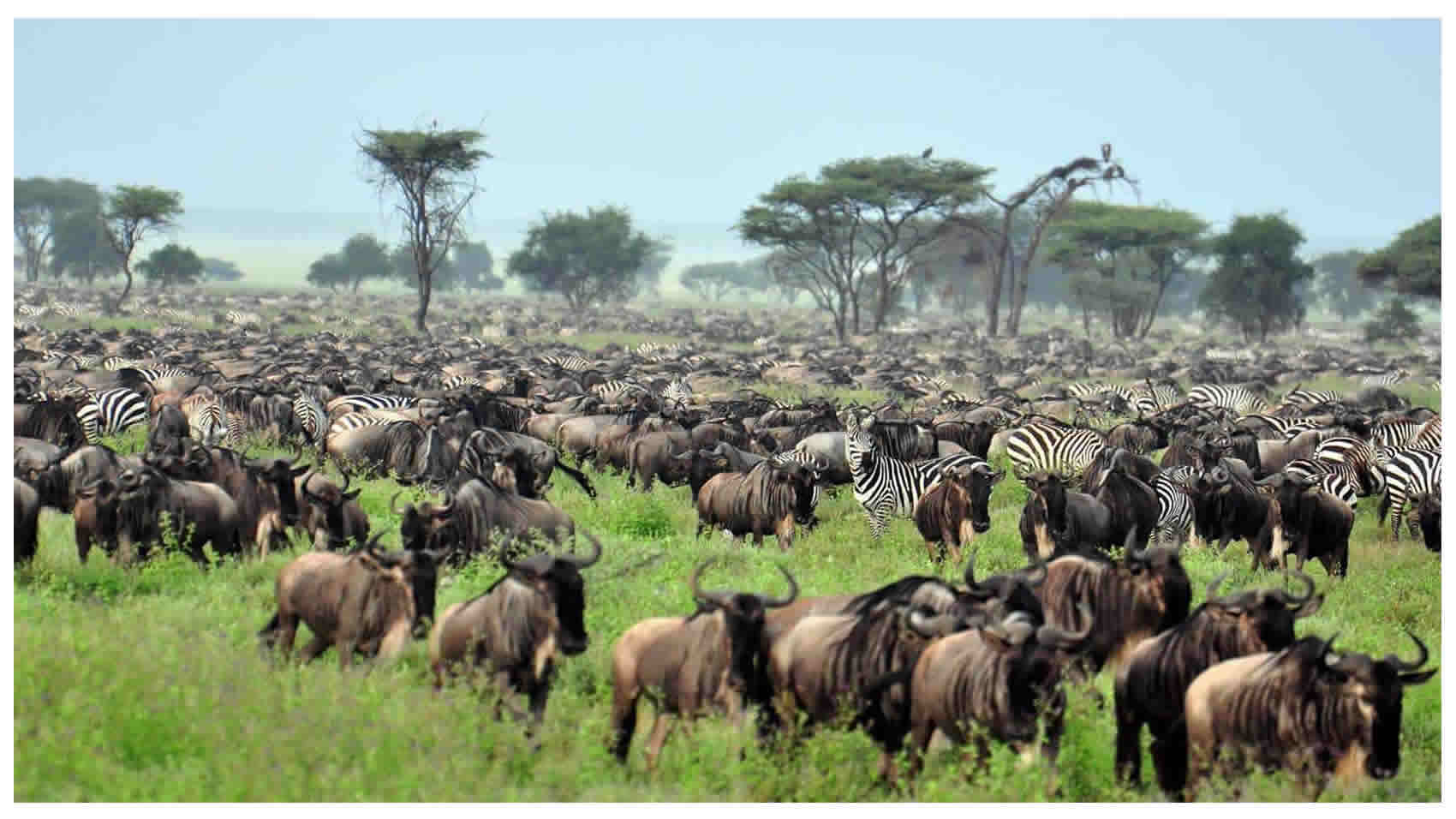
The name “Serengeti” comes from the Maasai word “Siringet,” meaning “endless plains.” The park is famous for its vast open grasslands that stretch across the horizon and support one of the largest concentrations of wildlife in the world. The Serengeti ecosystem extends beyond the park itself into conservation areas and game reserves, including the Ngorongoro Conservation Area in Tanzania and the Maasai Mara National Reserve in Kenya.
The most remarkable feature of Serengeti National Park is the Great Migration, one of the world’s most extraordinary natural events. Every year, over 1.5 million wildebeests, accompanied by hundreds of thousands of zebras and gazelles, move across the Serengeti ecosystem in search of fresh grazing and water. This migration follows a seasonal pattern influenced by rainfall. During the journey, animals face many dangers, including river crossings filled with crocodiles and attacks from predators. The migration attracts tourists, researchers, photographers, and wildlife filmmakers from around the globe.
The park supports an incredible diversity of wildlife. It is home to the “Big Five” animals: lions, elephants, leopards, buffaloes, and rhinoceroses. Serengeti is especially known for its large lion population, making it one of the best places in Africa to observe these predators in their natural habitat. Other animals found in the park include cheetahs, hyenas, giraffes, hippos, crocodiles, antelopes, jackals, and many smaller mammals. More than 500 bird species have also been recorded, including ostriches, secretary birds, vultures, eagles, and flamingos.
The landscape of Serengeti National Park is highly varied. The southern plains are mainly open grasslands that provide grazing grounds for migrating animals. Central Serengeti contains rocky outcrops called kopjes, which serve as resting and observation points for lions and other predators. The western corridor includes river systems and forests, while the northern region has rolling hills and woodlands near the Maasai Mara border.
Tourism is a major economic activity in the Serengeti region. Visitors participate in game drives, hot air balloon safaris, birdwatching, photography, and cultural tours. Luxury lodges, tented camps, and campsites provide accommodation for tourists throughout the park. The Serengeti is considered one of the top safari destinations in the world because of its rich wildlife and dramatic landscapes.
The park is managed by the Tanzania National Parks Authority in collaboration with conservation organizations and local communities. Despite its global importance, the park faces challenges such as climate change, poaching, habitat loss, and pressure from human population growth around protected areas. Conservation efforts focus on protecting wildlife migration routes, reducing illegal hunting, and promoting sustainable tourism.
Today, Serengeti National Park remains one of the most iconic wildlife reserves on Earth. Its endless plains, extraordinary migration, and rich biodiversity make it a symbol of African wilderness and a vital center for global conservation efforts.
Ngorongoro Crater is one of Africa’s most remarkable natural wonders and a globally important wildlife conservation area. Located in northern Tanzania within the larger Ngorongoro Conservation Area, the crater is the world’s largest intact and unfilled volcanic caldera. It was formed about two to three million years ago when a massive volcano erupted and collapsed inward. Today, the crater measures approximately 19 kilometers in diameter, covers about 260 square kilometers, and has walls rising about 600 meters above the crater floor. Because of its unique geography, rich wildlife, and scenic beauty, the area was declared a UNESCO World Heritage Site in 1979.
The Ngorongoro Crater is often called a “natural wildlife sanctuary” because its enclosed environment supports a high concentration of animals throughout the year. The crater floor contains grasslands, swamps, forests, rivers, and a soda lake known as Lake Magadi, creating diverse habitats for many species. The permanent availability of water and vegetation allows wildlife to remain within the crater instead of migrating seasonally.
The crater is home to more than 25,000 large animals and offers one of the best opportunities in Africa to observe wildlife in a relatively small area. Visitors commonly see elephants, buffaloes, zebras, wildebeests, hippos, warthogs, and various antelope species. The crater is especially famous for its large predator population, including lions, hyenas, jackals, and leopards. It is also one of the few places in Tanzania where the endangered black rhinoceros can still be observed in its natural habitat. Flamingos and other water birds are often found around Lake Magadi, adding to the area’s rich birdlife.
The Ngorongoro Conservation Area is unique because it combines wildlife conservation with human settlement. The Maasai people, who are traditional pastoralists, continue to live and graze livestock within parts of the conservation area. Their colorful culture, traditional dress, and lifestyle form an important part of the region’s identity. Many tourists visit Maasai villages to learn about local customs, dances, and traditional ways of life.
Tourism is one of the main economic activities associated with the Ngorongoro Crater. Thousands of visitors travel to the area each year to experience game drives, photography, birdwatching, and cultural tourism. The crater is often included in northern Tanzania safari circuits together with Serengeti National Park, Tarangire National Park, and Lake Manyara National Park. Several lodges and camps located along the crater rim provide breathtaking views of the landscape below.
The crater also has significant archaeological importance. Nearby Olduvai Gorge, often called the “Cradle of Mankind,” contains some of the earliest evidence of human evolution. Fossils discovered there by archaeologists Louis and Mary Leakey helped scientists better understand the origins of early humans.
The area is managed by the Ngorongoro Conservation Area Authority, which works to balance conservation, tourism, and the needs of local communities. However, challenges such as increasing tourism pressure, climate change, habitat degradation, and conflicts between wildlife and human activities continue to affect the region.
Despite these challenges, Ngorongoro Crater remains one of the world’s most extraordinary conservation areas. Its dramatic volcanic landscape, dense wildlife population, and cultural significance make it one of Africa’s premier safari destinations and an important symbol of natural heritage and conservation.
Lake Manyara National Park is one of Tanzania’s most scenic and ecologically diverse wildlife conservation areas. Located in northern Tanzania between the Great Rift Valley escarpment and Lake Manyara, the park lies about 126 kilometers west of the city of Arusha. Established in 1960, the park covers approximately 330 square kilometers, with nearly two-thirds of the area occupied by the shallow alkaline Lake Manyara itself. Although relatively small compared to other Tanzanian parks, Lake Manyara National Park is famous for its beautiful landscapes, rich biodiversity, and unique tree-climbing lions.
The park’s environment is highly varied and supports different ecosystems within a small area. Visitors can experience groundwater forests, open grasslands, acacia woodlands, swamps, hot springs, and the alkaline lake. This ecological diversity allows the park to support a wide range of wildlife and bird species. The dramatic backdrop of the Great Rift Valley escarpment adds to the park’s scenic beauty, making it one of the most visually attractive safari destinations in East Africa.
Lake Manyara National Park is internationally recognized for its birdlife. More than 400 bird species have been recorded in the park, making it a paradise for birdwatchers. Flamingos are among the most famous birds found along the lake’s shores, often appearing in large flocks that create pink reflections across the water. Other common birds include pelicans, storks, cormorants, herons, hornbills, kingfishers, and African fish eagles. Migratory birds also visit the park seasonally, increasing its bird diversity throughout the year.
The park supports many mammal species despite its relatively small size. Elephants are among the park’s most celebrated animals, and Lake Manyara is known for having large elephant populations that can often be observed at close range. Other wildlife includes buffaloes, zebras, giraffes, wildebeests, hippos, warthogs, impalas, baboons, blue monkeys, and bushbucks. Predators such as lions, leopards, and hyenas are also found within the park. Lake Manyara is especially famous for its rare tree-climbing lions, a behavior not commonly observed in other lion populations. These lions are often seen resting on tree branches during the daytime.
The park also contains several notable natural attractions. The hot springs known as “Maji Moto” are located in the southern section of the park and attract many visitors because of their steaming water and unique geological features. The groundwater forest near the park entrance contains tall mahogany and fig trees sustained by underground springs flowing from the Rift Valley escarpment.
Tourism is a major activity in Lake Manyara National Park. Visitors enjoy game drives, birdwatching, photography, canoeing during high water seasons, and guided nature walks in designated areas. Because of its location along Tanzania’s northern safari circuit, the park is often visited together with Ngorongoro Crater and Serengeti National Park. Lodges, tented camps, and campsites around the park provide accommodation for tourists from around the world.
The park is managed by the Tanzania National Parks Authority, which works to protect wildlife and ecosystems while supporting tourism and conservation education. However, the park faces environmental challenges such as climate change, changes in lake water levels, habitat pressure from surrounding human populations, and conflicts between wildlife and nearby communities.
Despite these challenges, Lake Manyara National Park remains one of Tanzania’s most important natural attractions. Its combination of scenic landscapes, abundant wildlife, rich birdlife, and unique ecological features makes it a valuable conservation area and a memorable safari destination in East Africa.
Tarangire National Park is one of Tanzania’s most important wildlife conservation areas and a major safari destination in East Africa. Located in northern Tanzania, the park lies about 120 kilometers southwest of Arusha and forms part of the country’s famous northern safari circuit alongside Serengeti National Park, Ngorongoro Crater, and Lake Manyara National Park. Established in 1970, Tarangire National Park covers approximately 2,850 square kilometers and is named after the Tarangire River, which flows through the park and serves as a vital water source for wildlife, especially during the dry season.
The park is best known for its large elephant population and iconic baobab trees that dominate the landscape. During the dry season, thousands of animals migrate into the park from surrounding ecosystems in search of water, creating one of the largest wildlife concentrations in Tanzania outside the Serengeti ecosystem. This seasonal migration makes Tarangire an excellent destination for wildlife viewing, particularly between June and October.
Tarangire National Park supports a rich diversity of wildlife. The park is famous for its elephants, with herds often numbering hundreds of individuals. Other commonly seen animals include lions, leopards, cheetahs, buffaloes, zebras, wildebeests, giraffes, impalas, warthogs, waterbucks, and elands. Tarangire is also home to less common species such as fringe-eared oryx and greater kudu, which are rarely seen in many other Tanzanian parks. Predators such as hyenas and wild dogs are occasionally observed as well.
Birdlife in the park is exceptionally rich, making Tarangire a paradise for birdwatchers. More than 500 bird species have been recorded within the park. Common species include ostriches, hornbills, secretary birds, eagles, vultures, kingfishers, bee-eaters, and yellow-collared lovebirds. Swamps and seasonal wetlands attract many migratory birds, especially during the rainy season.
The landscape of Tarangire National Park is varied and scenic. It includes open savannah grasslands, river valleys, seasonal swamps, acacia woodlands, and scattered rocky hills. The giant baobab trees are among the park’s most distinctive features and provide shelter and food for many animals. During the rainy season, the park becomes green and lush, while the dry season creates dramatic wildlife gatherings around the Tarangire River.
Tourism is an important economic activity in the park. Visitors participate in game drives, birdwatching, photography, guided walking safaris, and cultural tours to nearby communities. Compared to some of Tanzania’s more crowded parks, Tarangire often offers a quieter and more peaceful safari experience. Accommodation options include luxury lodges, tented camps, and campsites located both inside and outside the park.
The park is managed by the Tanzania National Parks Authority, which works to protect wildlife and habitats while promoting sustainable tourism. Conservation efforts are especially important because many migratory routes used by animals extend beyond the park boundaries into surrounding community lands. Challenges facing the park include habitat loss, human population growth, poaching, and climate change, all of which threaten wildlife movement and ecosystems.
Despite these challenges, Tarangire National Park remains one of Tanzania’s most valuable conservation areas. Its large elephant herds, diverse wildlife, abundant birdlife, and striking landscapes make it one of the most rewarding safari destinations in Africa. The park continues to play a vital role in wildlife conservation, tourism, scientific research, and environmental education in Tanzania.
Arusha National Park is one of Tanzania’s most scenic and accessible national parks, located in northern Tanzania about 25 kilometers from the city of Arusha. Although smaller than many of Tanzania’s famous parks, it is highly valued for its diverse landscapes, rich wildlife, and beautiful natural attractions. Established in 1960, the park covers approximately 552 square kilometers and lies between Mount Meru and the eastern branch of the Great Rift Valley. Its proximity to Arusha makes it a popular destination for day trips and an important stop on Tanzania’s northern safari circuit.
The park is dominated by the impressive Mount Meru, an active stratovolcano that rises to about 4,566 meters above sea level, making it the second-highest mountain in Tanzania after Mount Kilimanjaro. Mount Meru provides a dramatic backdrop to the park and attracts climbers and hikers from around the world. The mountain is known for its fertile slopes, forests, and spectacular views of nearby Mount Kilimanjaro on clear days. Trekking Mount Meru is considered excellent preparation for climbing Kilimanjaro because it helps climbers adjust to high altitudes.
Arusha National Park contains a remarkable variety of ecosystems within a relatively small area. These include montane forests, open grasslands, volcanic craters, swamps, lakes, and alpine vegetation zones on Mount Meru. One of the park’s most famous attractions is the Momella Lakes, a group of shallow alkaline lakes that attract large numbers of flamingos and other water birds. The lakes vary in color depending on algae and mineral content, creating beautiful scenery for visitors and photographers.
Another important feature of the park is the Ngurdoto Crater, often called “Little Ngorongoro” because of its resemblance to the larger Ngorongoro Crater. The crater contains forests, swamps, and grasslands that support many animal species. Wildlife in Arusha National Park includes giraffes, zebras, buffaloes, warthogs, waterbucks, bushbucks, and hippos. The park is also known for its black-and-white colobus monkeys and blue monkeys that inhabit the forested areas. Although predators such as leopards and hyenas exist in the park, they are rarely seen.
Birdlife in the park is abundant and diverse. More than 400 bird species have been recorded, making the park an excellent destination for birdwatching. Common birds include flamingos, herons, turacos, hornbills, crowned cranes, and various migratory species. The combination of forests, lakes, and wetlands creates ideal habitats for both resident and migratory birds.
Tourism is an important activity in Arusha National Park. Visitors enjoy game drives, canoeing on the Momella Lakes, hiking, birdwatching, photography, and mountain climbing. One unique feature of the park is the availability of guided walking safaris, which allow tourists to explore nature on foot accompanied by armed park rangers. This provides opportunities to experience wildlife and landscapes more closely than in vehicle-based safaris.
The park is managed by the Tanzania National Parks Authority, which works to conserve wildlife, forests, and water resources while promoting sustainable tourism. However, the park faces challenges such as habitat pressure from nearby human settlements, climate change, illegal resource use, and human-wildlife conflict.
Despite these challenges, Arusha National Park remains one of Tanzania’s most attractive and ecologically important protected areas. Its combination of mountain scenery, wildlife, birdlife, forests, lakes, and outdoor activities makes it a unique safari destination and an important center for conservation and tourism in East Africa.
Bwindi Impenetrable National Park is one of Africa’s most important and biologically rich protected areas, located in southwestern Uganda along the border with the Democratic Republic of Congo. Established as a national park in 1991 and designated a UNESCO World Heritage Site in 1994, Bwindi covers about 321 square kilometers of dense montane and lowland forest. It is globally renowned for its exceptional biodiversity and, most importantly, for being home to nearly half of the world’s remaining mountain gorillas.
The park’s name “Impenetrable” reflects its extremely dense vegetation, steep terrain, and tangled undergrowth, which make movement through the forest challenging. The landscape is made up of rugged hills, deep valleys, and thick rainforest that has existed for thousands of years. This ancient forest is one of the most ecologically diverse ecosystems in East Africa, supporting a wide variety of plant and animal species.
Bwindi Impenetrable National Park is best known for its mountain gorilla population. These endangered primates live in several habituated families that visitors can track under strict conservation rules. Gorilla trekking is the park’s main tourism activity and one of the most sought-after wildlife experiences in the world. The park is home to more than 450 mountain gorillas, representing a significant portion of the global population. Conservation efforts by the Uganda Wildlife Authority have helped increase gorilla numbers over the years through strict protection and community-based conservation programs.
In addition to gorillas, Bwindi supports a wide range of wildlife. The forest is home to chimpanzees, colobus monkeys, L’Hoest’s monkeys, forest elephants, duikers, bush pigs, and various small mammals. Although large predators are rare, the ecosystem supports a balanced food chain within the dense forest environment.
Birdlife in Bwindi is exceptionally rich, with more than 350 recorded species. The park is especially famous for its Albertine Rift endemics, species that are found only in this region of Africa. These include the African green broadbill, Shelley’s crimsonwing, and several turaco species. As a result, Bwindi is considered one of the top birdwatching destinations on the African continent.
The park’s vegetation is highly diverse due to variations in altitude, which range from about 1,160 meters to over 2,600 meters above sea level. This variation creates multiple habitat zones, including bamboo forests, montane rainforest, and swampy areas. These ecosystems support the park’s rich biodiversity and help regulate the local climate and water systems.
Tourism in Bwindi Impenetrable National Park is mainly centered on gorilla trekking, which involves guided hikes through the forest to observe habituated gorilla families. Other activities include nature walks, birdwatching, cultural visits to nearby communities, and hiking along forest trails. Tourism is carefully regulated to minimize disturbance to wildlife and ensure conservation sustainability.
The park is managed by the Uganda Wildlife Authority in partnership with conservation organizations and local communities. A portion of tourism revenue is shared with surrounding communities to support education, healthcare, and livelihoods, helping reduce pressure on the forest.
Despite its successes, Bwindi faces challenges such as habitat pressure from surrounding human populations, climate change, and occasional human-wildlife conflict. However, strong conservation measures have helped maintain its ecological integrity.
Today, Bwindi Impenetrable National Park remains one of the world’s most extraordinary natural reserves. Its ancient rainforest, rare mountain gorillas, and remarkable biodiversity make it a global conservation treasure and one of Africa’s most iconic wildlife destinations.
Queen Elizabeth National Park is one of Uganda’s most famous and diverse protected areas, located in the western part of the country between Lake Edward and Lake George. Established in 1952 and renamed in honor of Queen Elizabeth II in 1954, the park covers about 1,978 square kilometers, making it Uganda’s most visited national park. It lies within the Albertine Rift Valley, a region known for its rich biodiversity, scenic landscapes, and active geological features.
The park is characterized by a wide variety of ecosystems, including savannah grasslands, crater lakes, wetlands, tropical forests, and volcanic formations. This diversity creates habitats for an impressive range of wildlife and makes the park one of the most ecologically rich areas in East Africa. The Rwenzori Mountains can be seen in the distance, adding to the park’s dramatic scenery.
Queen Elizabeth National Park is especially famous for its tree-climbing lions found in the Ishasha sector in the southern part of the park. These lions are often seen resting on large fig tree branches, a rare behavior not commonly observed in most lion populations in Africa. The park is also home to elephants, buffaloes, hippos, leopards, hyenas, warthogs, and various antelope species such as Uganda kobs, waterbucks, and topis. Large populations of hippos and crocodiles are found in the Kazinga Channel, which connects Lake Edward and Lake George.
Birdlife in the park is exceptionally rich, with more than 600 recorded species, making it one of the best birdwatching destinations in Africa. The Kazinga Channel alone attracts numerous water birds, including pelicans, kingfishers, herons, cormorants, and African fish eagles. The park also supports rare species such as the shoebill stork in wetland areas.
One of the park’s most popular attractions is a boat cruise along the Kazinga Channel, which provides close-up views of hippos, crocodiles, elephants, and a wide variety of birds along the shoreline. The Mweya Peninsula is a major tourism hub within the park, offering game drives, boat tours, and accommodation facilities.
The park also features volcanic crater lakes formed by past geological activity in the Albertine Rift. These crater lakes and surrounding landscapes provide scenic viewpoints and opportunities for photography and nature exploration.
Tourism activities in Queen Elizabeth National Park include game drives, boat safaris, birdwatching, chimpanzee tracking in Kyambura Gorge, nature walks, and cultural experiences with nearby communities. The Kyambura Gorge, also known as the “Valley of Apes,” is a forested ravine within the park that is home to a small population of chimpanzees.
The park is managed by the Uganda Wildlife Authority, which oversees conservation, tourism, and community engagement. Conservation efforts focus on protecting wildlife, reducing human-wildlife conflict, and preserving habitats under pressure from surrounding population growth and agricultural expansion.
Despite these challenges, Queen Elizabeth National Park remains one of Uganda’s most important conservation areas. Its combination of savannah wildlife, rich birdlife, crater landscapes, and unique ecological features makes it a key destination for tourism and a vital part of Uganda’s natural heritage.
Murchison Falls National Park is Uganda’s largest and oldest national park, covering about 3,840 square kilometers. It is located in the northwestern part of the country, stretching across the districts of Buliisa, Nwoya, Kiryandongo, and Masindi. Established in 1952, the park is centered around the dramatic Murchison Falls, where the Victoria Nile forces itself through a narrow 7-meter gorge and plunges about 43 meters into the river below. This powerful waterfall is one of the most spectacular natural features in Africa and gives the park its name.
The park is part of the larger Murchison Falls Conservation Area, which also includes surrounding wildlife reserves and forested regions. Its landscapes are highly diverse, ranging from savannah grasslands and riverine forests to wetlands, woodlands, and the Albertine Rift escarpment. The Nile River is the park’s lifeline, cutting across its northern section and supporting a rich concentration of wildlife.
Murchison Falls National Park is home to a wide variety of animals. Large mammals commonly seen include elephants, buffaloes, giraffes (especially the Rothschild’s giraffe), lions, leopards, hyenas, warthogs, Uganda kobs, waterbucks, and oribis. The park also supports hippos and Nile crocodiles in very large numbers along the riverbanks. The northern section of the park is particularly rich in wildlife because of its open savannahs and reliable water sources.
Birdlife in the park is exceptional, with over 450 recorded species. One of the most famous birds found here is the shoebill stork, often spotted in the marshy areas of the Nile Delta. Other common birds include African fish eagles, kingfishers, hornbills, herons, bee-eaters, and secretary birds. The park is considered one of the best birdwatching destinations in East Africa.
A major highlight of visiting the park is the boat safari along the Nile, which takes visitors from the riverbanks up to the base of Murchison Falls. Along the way, tourists can observe hippos, crocodiles, elephants, buffaloes, and a wide variety of birds at close range. The hike to the top of the falls offers dramatic views of the Nile as it crashes through the narrow gorge, creating mist and thunderous sound.
Other activities in the park include game drives in the northern sector, chimpanzee tracking in the nearby Budongo Forest Reserve, birdwatching, sport fishing, and nature walks. The park also features scenic landscapes such as the Albert Delta, where the Nile flows into Lake Albert, creating rich wetland habitats.
Tourism and conservation in the park are managed by the Uganda Wildlife Authority. Conservation efforts focus on protecting wildlife from poaching, managing human-wildlife conflict, and maintaining the integrity of river and savannah ecosystems. Historically, the park suffered from poaching and civil unrest, which reduced wildlife populations significantly, but strong conservation efforts have helped restore many species.
Despite ongoing challenges such as oil exploration in surrounding areas, habitat pressure, and climate change, Murchison Falls National Park remains one of Uganda’s most important protected areas. Its powerful waterfall, rich wildlife, and diverse landscapes make it a flagship destination for tourism and conservation in East Africa.